Creating a unified digital experience to boost library accessibility for millions
Creating a unified digital experience to boost library accessibility for millions
ROLE
Product Designer
DURATION
8 weeks
TEAM MEMBERS
Product Manager · Technical Lead · Marketing Lead · Front-end Developer · QA Tester
OVERVIEW
LibraryOn is a unified digital platform for public libraries in the UK, bringing together over 3000 libraries and more than 3500 local authorities, creating revitalising how people access library services nationwide.
As its Interaction Designer, I worked on transforming user needs and stakeholder requirements, into impactful digital experiences.
As part of this work, we engaged with users and library service providers through surveys and workshops, to uncover their needs.
OUTCOMES
500+ events showcased daily, from 3 major events providers
83% of users agreed the new feature made it easier to find events near them
Stakeholder approval secured, paving the way for additional funding
Design system updated to token-based, with supporting documentation for future teams
Agile working solidified as a viable approach within the organisation
CHALLENGE
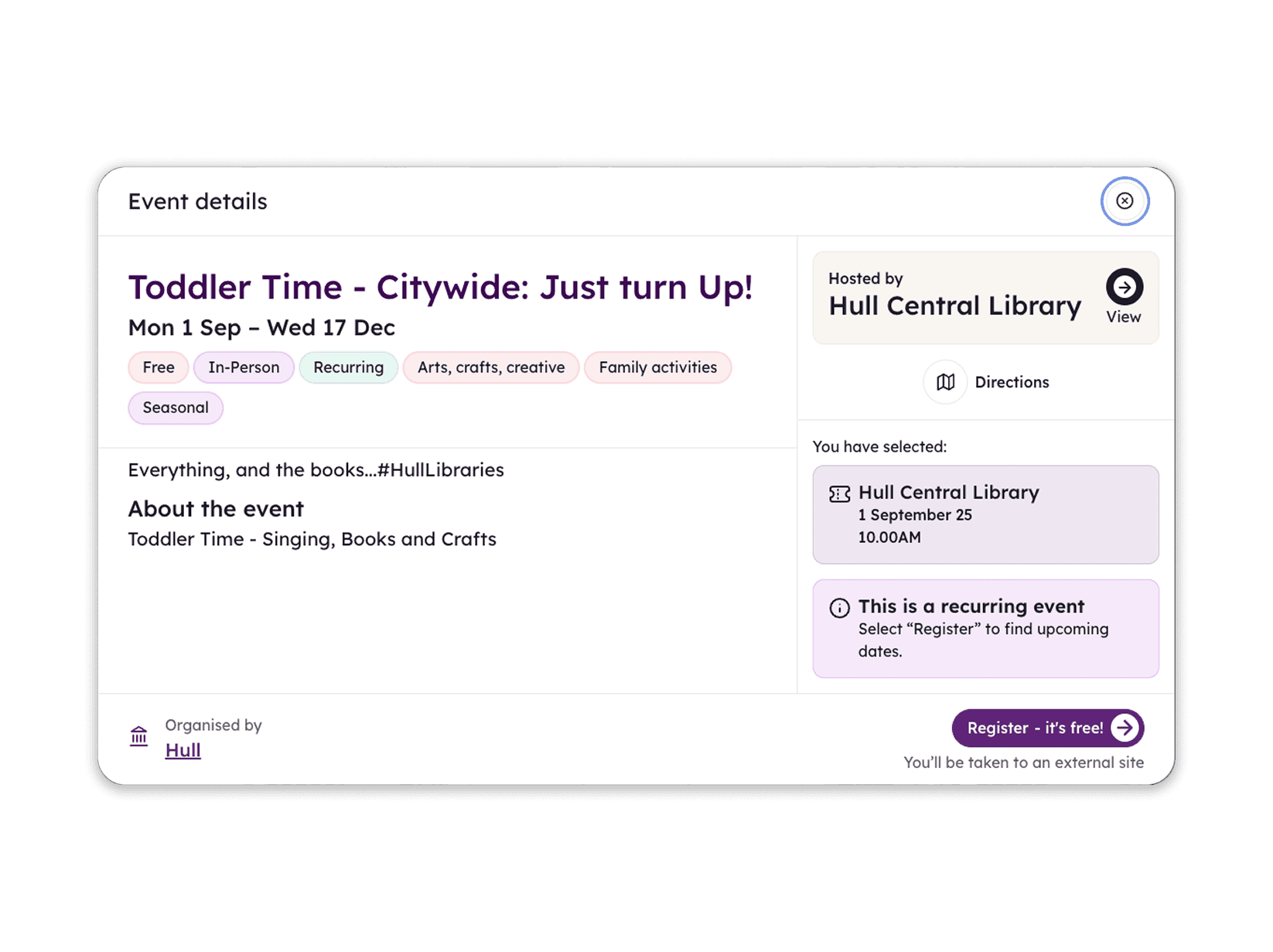
The ease of discovering a local library event can vary drastically depending on where you reside in the UK. Users primarily used third party platforms, often with bad UX, to find and attend library events. This led to user confusion, and low attendance at events.
Moreover, Library service providers (LSPs) rely on attendance to justify funding for their services — they also wished to make their events more visible, with little additional workload.
From our internal survey, we found that 21% of users browsed and searched for events, of which 64% looked at third-party events websites first.
Furthermore, my team was tasked with increasing the value of existing products, such as our library map.
DISCOVERY
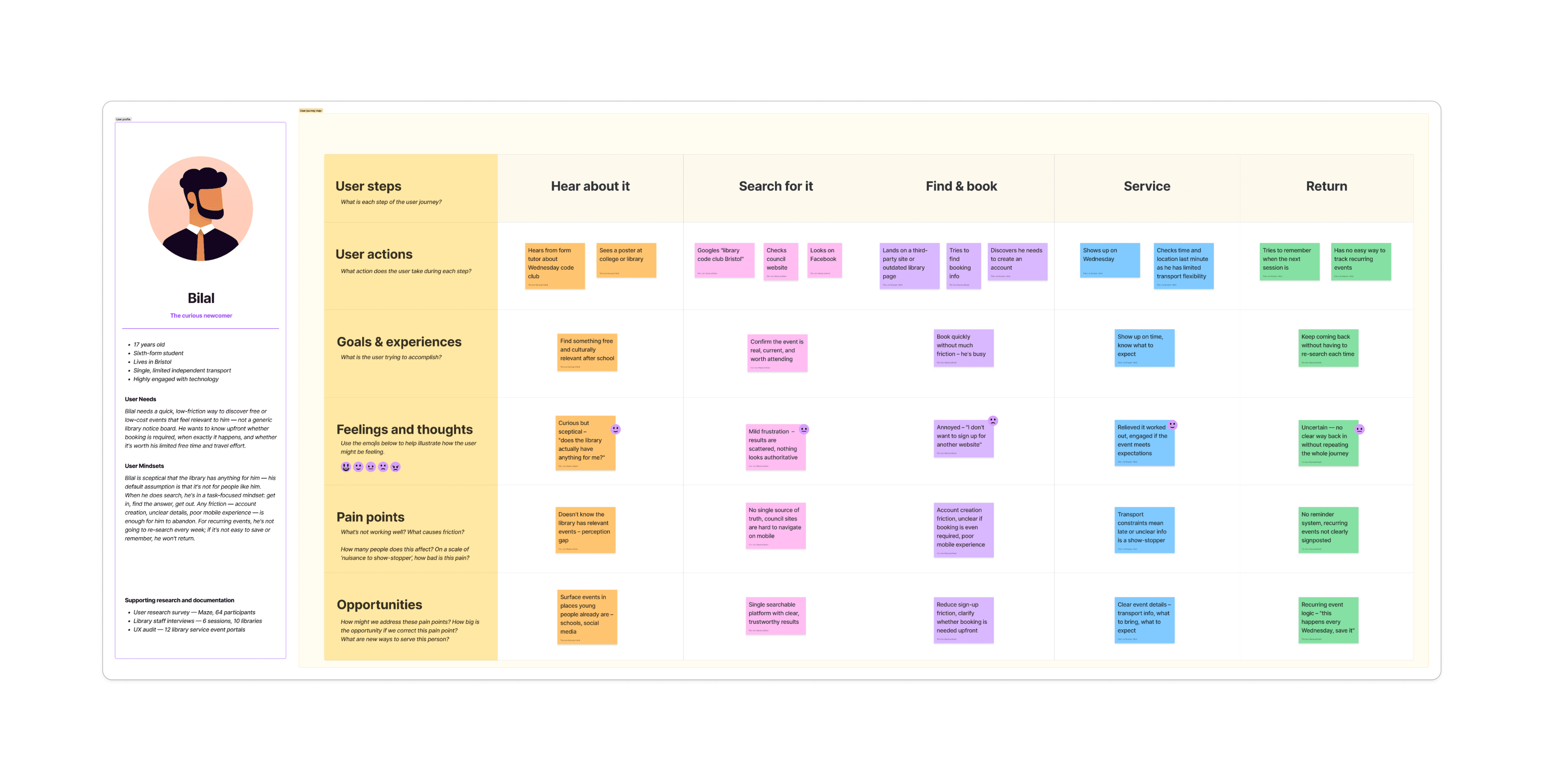
To gather data on how library staff use and host events for their services, I organised 6 interviews with library staff from 10 libraries.
Among other things, we discovered that their tech stacks are very restricted, and that they are time poor — meaning we needed a solution that asked little to no extra input from libraries.
We also ran a user research survey, where we spoke to users across the UK. 74% were unsatisfied or very unsatisfied with their experience, citing poor UX.
To contextualise user insights via direct observation, I led a UX audit of events portals for 12 library services, as well as market research on commercial events portals. Incoherent UX makes tasks more difficult, accessibility is an afterthought, many are not responsive, and event categorisation is often vague.
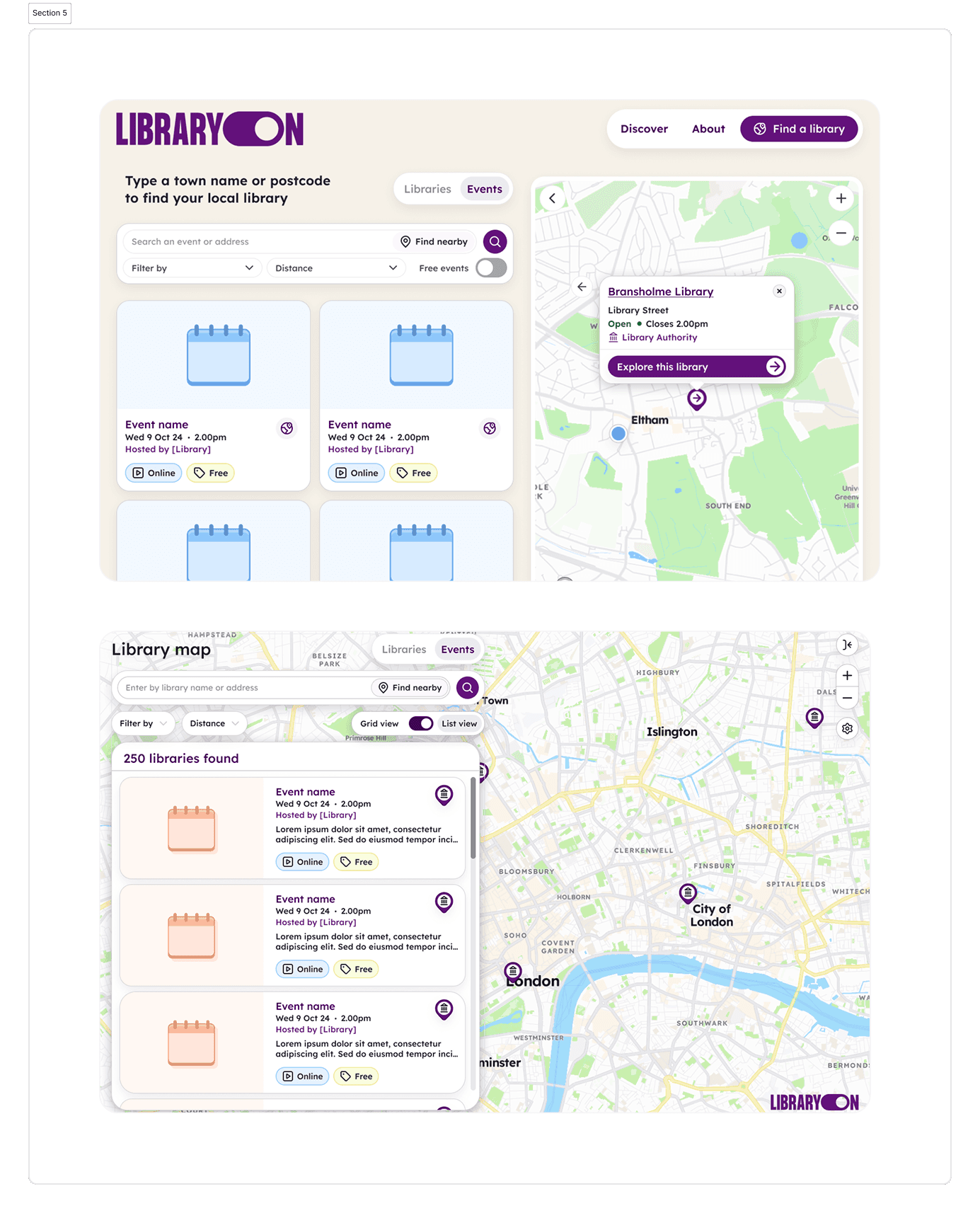
We discussed tech limitations and how to facilitate usage, and agreed on a two-pronged solution — an Events Browser (public front-end) and Events CMS (admin back-end).
How might we…
Create a centralised platform, allowing users to discover, book and attend events at their local library?
SOLUTION
I hosted a series of co-creation workshops to sketch out what user journeys on the site could look like. This approach was key in breaking down design tasks, and planning dev work.
The creation of an events portal was set as a goal, but we had no means of filtering what was imported. Lack of ability for libraries to manage events also became apparent. During stakeholder catchups, I flagged that a lack of categorisation and curation would negatively impact user engagement — lapsed and new users were among the toughest cohorts to engage, from research carried out.
We began user testing by the groundwork for either a new Feature page, or converting an existing search function. To facilitate this, I created wireframes in Balsamiq, anchoring designs in meetings with colleagues.
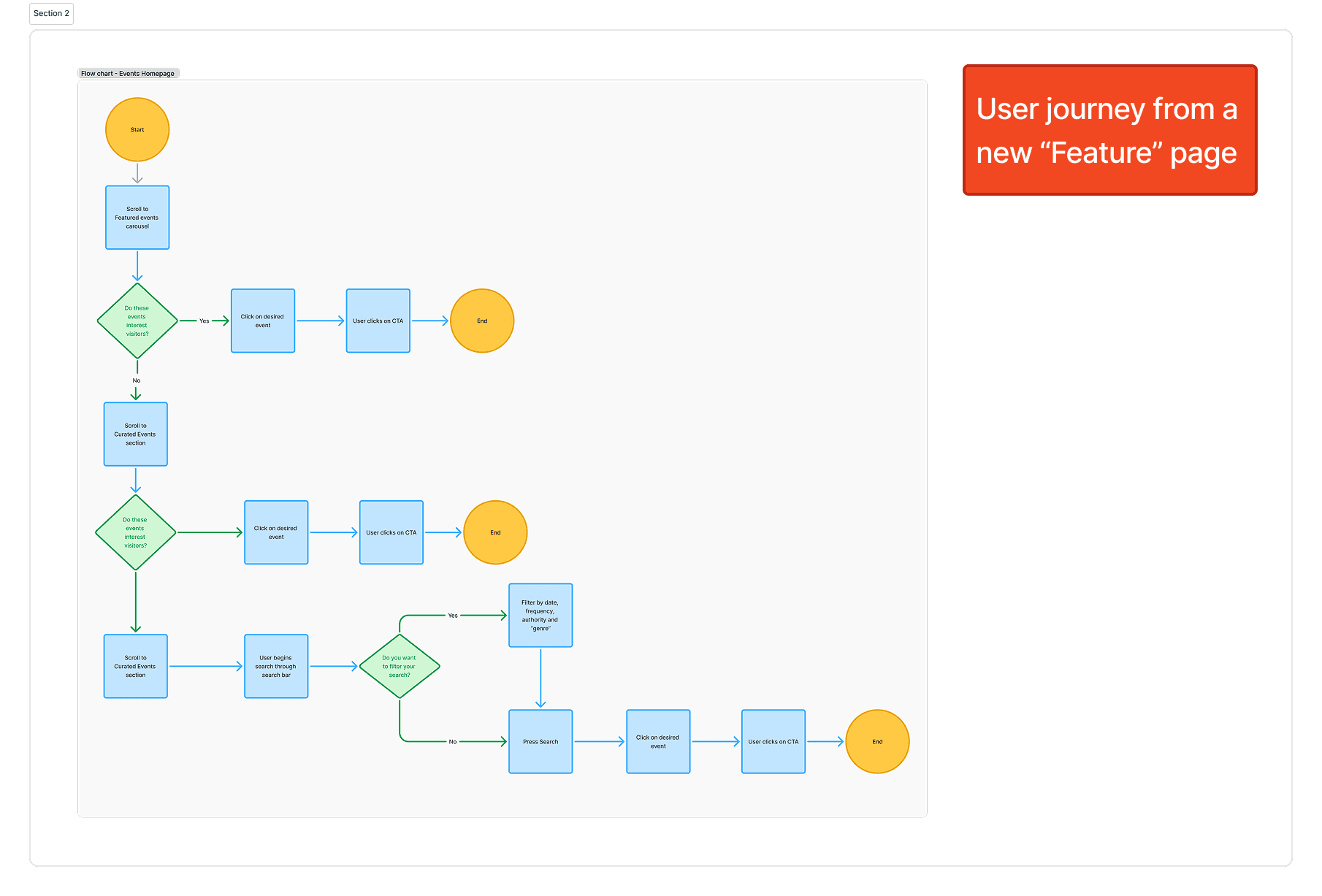
After discussions with my team, I leaned into three user journeys — events search via map, events search via Feature page, and events search via Library page. I also had regular catch-ups with team members to share ideas, no matter how big or small.
Iterations highlighted shortfalls in existing design patterns, notably accessibility and responsiveness. I created a ticket to address this shortfall, and scheduled a full audit down the road. Working with GDS guidelines to update the design system, and worked alongside developer to note actionable items for later.
I pitched using an LLM to sort and categorise events, thus allowing curation. I designed the back-end for this at the request of the Tech Lead, using Strapi CMS' design system.
RESULTS & IMPACT
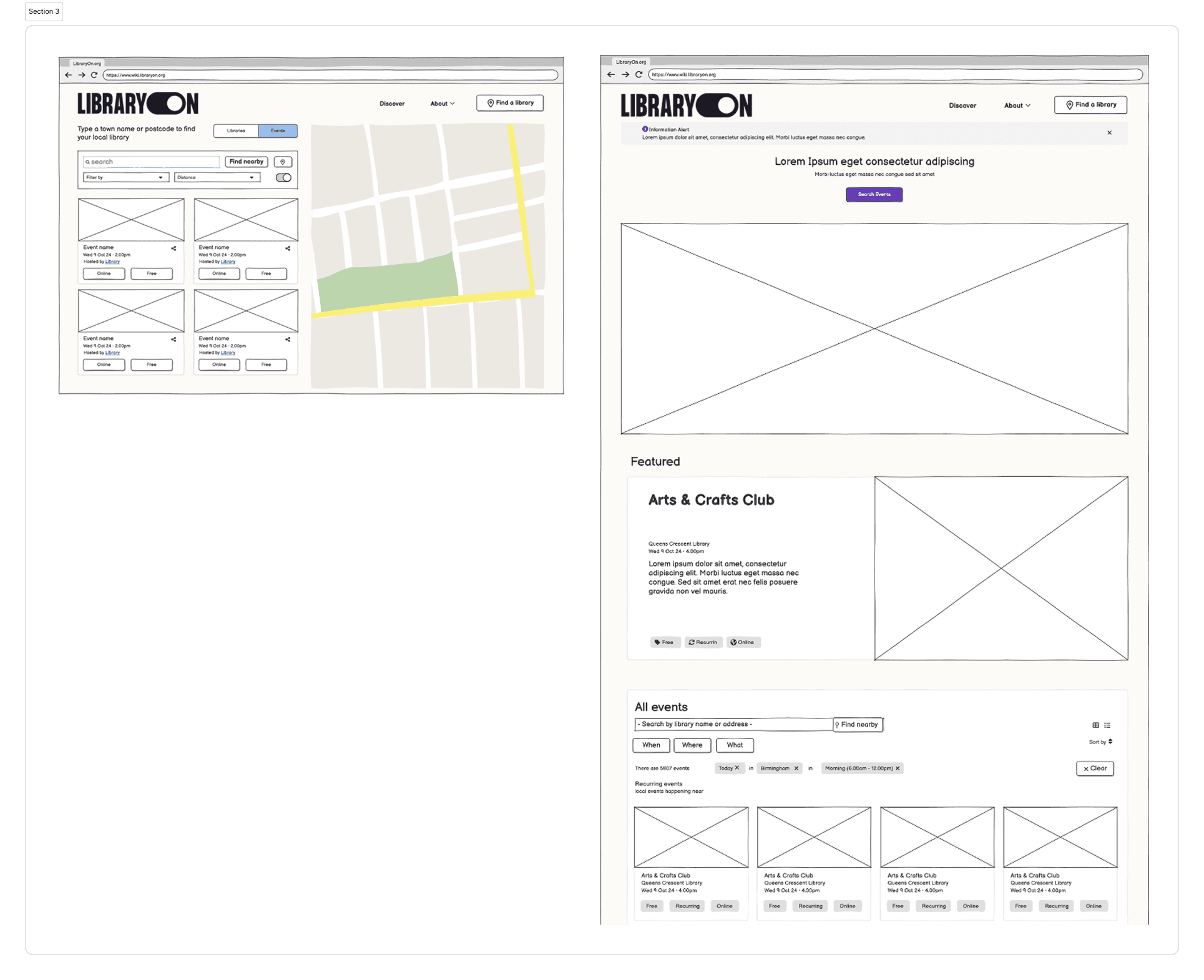
Deployment of a new events platform, showcasing 500+ events daily, from 3 major events providers.
83% of users agreed or strongly agreed that the new site feature made it easier to find events near them.
Stakeholder approval, paving the way for additional funding.
I wrote supporting documentation on the UI for these new patterns, and updated the design system so that it became token based — ensuring knowledge related to the project is safeguarded, and provides developers with key context.
From this project, we were able to refine the project's USP, and set additional goals reflecting this — Libraries B2B CMS, Mobile Libraries.
We solidified agile working as a viable way of working within the organisation, and shared our approach to product development — notable, as this way of working is still rare in the public sector, and lacks user engagement.
REFLECTIONS
Importance of gathering hands-on data at the beginning of the project.
Need to carry out more usability testing of lo-fi designs during the project.
Robust design system to spend more time on high-view tasks.